
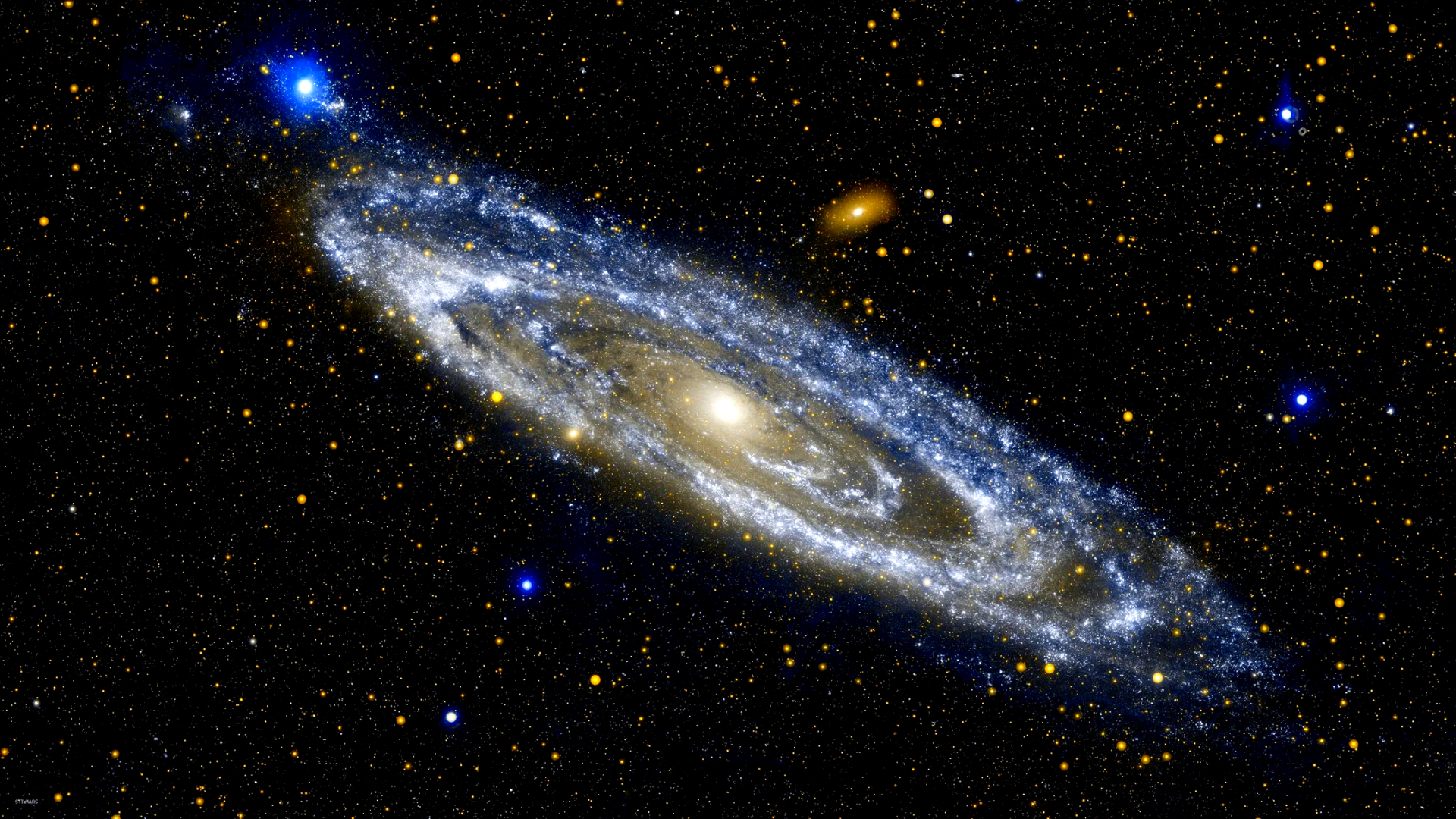
SDAE on the Afterlife—Physics would Say—in Life & in Death—Sacred Divine Spirituality's Spirit Field is the gateway for Long Life or Immortality “for those who dare”
SDAE Afterlife—NuSpecianism
Sacred Divine Spirituality
Written by Aston Farquharson
“The leaves are for the healing of the nations” — “My people are destroyed for lack of knowledge”
In SDAE, sacred means Nature is alive
In SDAE, divine means the living Universe
SDAE Afterlife has not been proven by physics. Physics only measures the physical External Reality Dimension (Classical Physics, General Relativity, and Quantum Physics), not the non-physical Interior Reality Dimension called the Spirit Field of conscious awareness!
In a cyclic universe, however, the potential for Conscious Awareness never ends.
Even if individual lives end,
The Spirit Field is the gateway for Conscious Awareness: via Balance, Stability, Coherence, and Resonance for better and longer life:
Immortality “for those who dare”—God has already made everything for our needs—
For all the Cyclic Times—
For all Future Ages:
Now,
What Science Says About Cycles of Universes (based on theoretical physics).
What SDAE says About the Afterlife (based on the above theoretical physics).
Modern physics includes several serious proposals suggesting the universe may be cyclic rather than singular. There is no proof information transfer during cycles. These theories do not claim: Purpose, Consciousness, Memory between cycles, or spiritual continuity.
They describe physical recurrence under strict mathematical constraints.
**The Cyclic Universe and SDAE:
The Eternal Return of Structure and Spirit**
How Science, Consciousness, and Spiritual Traditions Converge on a Universal Pattern of Renewal
1. The Question That Won’t Go Away
Every civilization has asked the same questions in different languages, with different myths, under different skies:
- Is this world a one-time creation?
- Is there something beyond death?
- Does the universe repeat itself?
- Do we belong to a greater pattern?
Modern cosmology usually avoids these questions, focusing instead on what can be measured here and now.
But in the last 40 years, a surprising development occurred:
leading physicists began proposing cosmological models that look, in some ways, like ancient ideas of cycles, renewals, and new worlds.
These are not religious theories,
and not proofs of an afterlife,
but they express a profound truth:
The universe may not be a single, one-way event.
It may be part of a grand unfolding that includes endings and beginnings, collapse and expansion, death and rebirth.
This opens the door for SDAE—a philosophical model that sees both the outer universe of matter and the inner universe of consciousness as two aspects of the same deep origin.
2. What Science Says About Cycles (Without Overclaiming)
The following ideas come from respected physicists—
not from spirituality, not from belief, but from mathematical attempts to understand gravity and time.
Sir Roger Penrose (Conformal Cyclic Cosmology)
Penrose proposes that the universe goes through vast “eons.”
At the end of one eon, the universe becomes smooth, calm, and scale-free—
and that state becomes the seed of a new Big Bang.
Loop Quantum Gravity (Big Bounce)
Loop quantum gravity eliminates singularities.
Instead of a universe beginning from nothing,
the universe emerges from the collapse of a previous one.
Lee Smolin (Fecund Universes)
Smolin’s idea suggests that black holes may spawn new universes,
each with slightly different physical laws.
None of these models confirm cycles.
None promise life after death or spiritual survival.
They simply propose:
The universe may be part of something larger,
where endings give rise to beginnings.
This possibility resonates deeply with the SDAE worldview.
3. SDAE and the Meaning of Cosmic Cycles
SDAE—Singularity Dual-Aspects Emergence—does not claim scientific authority.
It is a metaphysical framework that respects science and draws inspiration from its mysteries.
SDAE imagines reality as having two inseparable aspects:
-
The Outer Aspect (Structure):
matter, energy, spacetime, physical law. -
The Inner Aspect (Spirit Field):
consciousness, meaning, experience, compassion, coherence.
In a cyclic universe:
- the Outer Aspect contracts into a dense state,
- the Inner Aspect returns to unity (not as personal identity, but as potential),
- and both emerge again when a new universe expands (a rebirth of the old in some form —the past is always pregnant with the future).
This is not a promise of personal immortality,
but a philosophical reflection on how cycles preserve the deeper fabric of being.
In SDAE metaphysics, the universe never truly ends—
it transforms.
And what transforms is both the physical order and the field of consciousness itself.
4. How Some Religious Traditions See Cycles (Respectfully and Symbolically)
Many religious groups, reading about cyclic cosmology, find echoes of their own narratives:
- Hinduism: cycles of creation, preservation, destruction, and rebirth.
- Buddhism: endless cycles of worlds arising and dissolving.
- Ancient Egyptian belief: the sun god dies and is reborn each day.
- Native American cosmologies: worlds that rise from earlier worlds.
- Christian eschatology (non-literal reading): a “new heaven and new earth” after the end of the present age.
SDAE does not claim that science proves these beliefs.
But it shows how human intuition about cycles resonates across cultures and eras:
People sense that destruction is never the final word
and that creation is a repeating act, not a single-event miracle.
Some religious thinkers see in cyclic universes
a metaphor for spiritual renewal, rebirth, or afterlife,
not as physical survival but as participation in a greater continuity of existence.
SDAE does not decide this for anyone.
It creates a philosophical space where people can explore these interpretations responsibly.
5. What SDAE Says About Life, Death, and Continuity
SDAE does not define an afterlife.
But it does propose something profound:
1. Consciousness is the inner expression of the universe (we know it, we feel it, we live it).
It is not an illusion.
It is not an accident.
It is a fundamental aspect of reality.
2. Consciousness arises whenever conditions allow it.
Just as stars form where physical conditions permit,
inner experience forms where complexity permits.
3. In a cyclic universe, the potential for consciousness never ends.
Even if individual lives end,
the Spirit Field—the capacity for conscious awareness—continues in future cycles.
The Spirit Field offers the potential for long life to immortality via a Life of Balance, Stability, Coherence, and Resonance!
Again, this is not personal survival.
It is metaphysical continuity:
the same deep origin re-expresses itself again, and again.
Some may interpret this as:
- “spiritual rebirth,”
- “cosmic renewal,”
- “divine cycles,”
- “a new heaven and earth,”
- or simply “the universe healing itself.”
SDAE allows for multiple interpretations without privileging any.
6. Why This Matters for Human Life Today
Whether or not cyclic cosmology is true,
it teaches us three essential lessons that align deeply with SDAE:
1. Nothing is truly final.
Not suffering, not despair, not endings.
2. The universe renews itself.
And we must learn to renew ourselves physically, emotionally, and spiritually.
3. We are part of a grand pattern.
A pattern older than stars, older than galaxies,
older than the concepts of life and death. The universe is filled with vast potential for infinite conscious awareness—as do life—like the longest known phenomenon—stars, then black holes with infinite lifespans.
In this view:
- compassion becomes our natural mode of living,
- humility becomes our natural stance before the cosmos,
- and coherence between body and spirit becomes our natural goal.
7. The SDAE Interpretation (Without Overclaiming Science)
SDAE does not say:
- cycles are proven
- consciousness survives death
- cosmology validates religion
- science confirms spirituality
Instead, SDAE says:
The universe may move through cycles,
and both physical structure and inner experience
may re-emerge each time from the same deep origin.
This gives us a framework where:
- science is honored,
- spirit is respected,
- human life is dignified,
- and existence is meaningful even in the face of suffering.
It is the bridge between the universe outside us
and the universe inside us.
**8. Closing Reflection on Life, Death, and Afterlife:
If the Universe Cycles, What Does That Mean for Us?**
If the universe cycles—
if endings become beginnings,
if the cosmos renews itself—
then every life participates in something far larger than itself.
This does not erase loss or grief.
It does not promise immortality.
But it affirms a deeper truth:
Life is woven into the fabric of a universe that itself does not end—
it transforms, renews, and becomes again.
And in that endless becoming,
humans find their place:
as expressions of the universe’s outer structure
and the universe’s inner spirit.
This is the heart of the SDAE worldview.
How SDAE Metaphysics Interfaces with Cyclic Cosmology
Introduction: Two Languages, One Question
Cyclic cosmology asks a scientific question:
Is the universe a one-time event, or does it undergo repeated phases of expansion, transformation, and renewal?
SDAE (Singularity Dual-Aspect Emergence) asks a philosophical question:
If reality itself unfolds in cycles, how might human meaning, consciousness, and responsibility be understood within such a universe?
These are not the same question.
They operate in different domains.
But they can interface—carefully, respectfully, and without conflation.
1. Cyclic Cosmology: A Scientific Overview (Brief)
Modern physics includes several serious proposals suggesting the universe may be cyclic rather than singular:
-
Penrose’s Conformal Cyclic Cosmology (CCC):
The universe transitions between aeons through conformal rescaling, not rebirth in a literal sense. -
Loop Quantum Cosmology (LQC):
Quantum gravity effects replace the Big Bang singularity with a “bounce.” -
Smolin’s Cosmological Natural Selection:
New universes may emerge from black holes, with physical constants evolving over generations.
These theories do not claim:
- purpose
- consciousness
- memory between cycles
- spiritual continuity
They describe physical recurrence under strict mathematical constraints.
2. SDAE’s Metaphysical Position (Clear Boundary)
SDAE does not claim:
- that the universe remembers past cycles
- that consciousness survives cosmological transitions
- that cycles imply spiritual reincarnation
- that physics confirms metaphysical meaning
Instead, SDAE adopts a non-intrusive metaphysical stance:
If the universe unfolds through cycles of emergence, dissolution, and renewal, then human meaning must be understood as local, emergent, and ethically grounded within each cycle.
SDAE does not add new physics.
It interprets the existential implications.
3. Cycles as Structural Patterns, Not Intentional Acts
In cyclic cosmology, repetition occurs because:
- energy redistributes
- entropy resets or dilutes
- quantum geometry prevents singular collapse
There is no “goal” in the cycle.
SDAE parallels this with a philosophical insight:
Meaning does not require cosmic intention.
It arises within structure.
Just as physical laws permit recurring universes,
those same laws permit recurring emergence of:
- life
- awareness
- ethical responsibility
- compassion
Not because the universe wants them—
but because stability allows complexity to reappear.
4. Dual-Aspect Emergence Across Cosmic Cycles
SDAE’s core principle—dual-aspect emergence—fits naturally here.
Outer Aspect (Physics):
- cycles of expansion and contraction
- bounces or conformal transitions
- matter reorganizing under law
Inner Aspect (Experience):
- consciousness emerging locally
- meaning forming within finite lives
- values arising within temporal contexts
The key SDAE insight:
Each cycle gives rise to new conscious perspectives,
not preserved ones.
There is no cosmic memory bank.
There is no universal mind accumulating experience.
Instead:
- structure repeats
- experience re-emerges
- meaning is always fresh
- responsibility is always local
5. Why Cyclic Cosmology Resonates with Human Experience
Humans instinctively resonate with cyclic models because:
- lives follow cycles (birth, growth, decay)
- ecosystems regenerate
- societies rise and fall
- individuals lose balance and restore it
SDAE emphasizes that this resonance is psychological and existential, not evidential.
We are drawn to cyclic cosmology not because it proves meaning,
but because our lives already feel cyclical.
The universe may or may not repeat—but human experience undeniably does.
6. Ethical Implications: Meaning Without Permanence
A cyclic universe does not guarantee salvation, immortality, or continuity.
In fact, it strengthens an SDAE ethical position:
Meaning matters precisely because it is not guaranteed to persist.
If:
- universes arise and dissolve
- consciousness emerges temporarily
- structure does not remember us
Then:
- compassion is not rewarded cosmically
- ethics are not enforced universally
- dignity must be chosen, not promised
SDAE therefore frames cyclic cosmology as an ethical amplifier, not a comfort doctrine.
7. What SDAE Does Not Claim
To preserve integrity, SDAE explicitly rejects:
- spiritual reincarnation via cosmic cycles
- consciousness transfer between aeons
- black holes as afterlife portals
- the universe as a learning entity
These ideas may be poetic or mythic—but they are not SDAE.
SDAE insists on epistemic humility.
8. The Interface Summarized
|
Domain |
Cyclic Cosmology |
SDAE Interpretation |
|
Physics |
Repeating cosmic phases |
Structural recurrence |
|
Consciousness |
Local, emergent |
Finite and contextual |
|
Meaning |
Not addressed |
Created by humans |
|
Ethics |
Not inherent |
Central responsibility |
|
Memory |
No cosmic memory |
No metaphysical carryover |
9. Final SDAE Reflection
If the universe is cyclic, then:
- existence is resilient
- structure reappears
- complexity returns
- consciousness emerges again, and again
But always new.
Always finite.
Always responsible only for itself.
SDAE concludes:
A cyclic universe does not promise meaning—
it makes meaning necessary.
And within each cycle, within each life, within each moment of awareness,
the task remains the same:
to live with coherence, compassion, and dignity—
without expecting the universe to remember us for doing so.
SDAE offers You the Scientific Foundations of Cyclic and Bounce Cosmologies
This provides a technical overview of the three influential scientific models that explore the possibility of cosmological cycles:
(1) Conformal Cyclic Cosmology (CCC),
(2) Cosmological Natural Selection (CNS),
and (3) Loop Quantum Gravity (LQG) Big Bounce models.
These models come from mainstream theoretical physics, appear in peer-reviewed literature, and are presented here without metaphysical interpretation.
A.1 Roger Penrose’s Conformal Cyclic Cosmology (CCC)
A.1.1 Overview
Conformal Cyclic Cosmology (CCC), developed by Sir Roger Penrose, extends general relativity by using conformal geometry to join the infinite future of one universe (called an “eon”) to the Big Bang of the next.
A.1.2 Conformal Geometry
A conformal transformation preserves angles but not absolute sizes.
Penrose observed that in both:
- the very early universe (ultra-hot radiation-dominated Big Bang), and
- the very late universe (cold, sparse, dominated by decayed particles and photons)
the physics becomes scale-free.
That is:
size stops mattering, and only shape/angles matter.
A.1.3 Linking Eons
Because of this scale-free nature:
- the infinite future of one eon
- can be mathematically mapped onto
- the Big Bang of the next eon.
This creates a sequence:
Eon → Big Bang → Expansion → Dilution → Eon → Big Bang → …
A.1.4 Observational Hints
Penrose and collaborators have suggested that residual patterns from black hole mergers in the previous eon might appear as circular anomalies in the cosmic microwave background (CMB).
However:
- Other researchers dispute these findings.
- Current consensus: no conclusive evidence yet.
A.1.5 Scientific Status
CCC is beautifully mathematical, consistent with general relativity at large scales, but unconfirmed.
It is considered an interesting speculative model in cosmology.
A.2 Lee Smolin’s Cosmological Natural Selection (CNS)
A.2.1 Overview
Smolin proposes that universes reproduce through black holes.
This is not metaphor—he treats it as a real physical mechanism based on general relativity’s interior solutions and speculative quantum gravitational extensions.
A.2.2 Black Hole → Baby Universe Hypothesis
Smolin’s mechanism:
- A black hole forms from collapsing matter.
- Near the theoretical singularity, quantum gravitational effects prevent infinite collapse.
- A new spacetime region may “pinch off” from ours, becoming a new universe with its own Big Bang.
This is conceptually related to wormhole-like geometries.
A.2.3 Evolution of Parameters
Smolin hypothesizes that fundamental constants (particle masses, force strengths) may vary slightly in each new universe.
This creates a kind of cosmic natural selection:
- Universes good at making black holes → produce more offspring.
- Thus, over “generations,” universes become optimized for black hole production.
A.2.4 Fine-Tuning Argument
This model offers a natural explanation for why our universe’s constants seem “fine-tuned” for long-lived stars:
- long-lived stars → more black holes
- black holes → more baby universes
- universes evolve toward parameters that maximize black hole formation
This is a scientific alternative to anthropic reasoning.
A.2.5 Scientific Status
CNS is speculative but consistent with general relativity and reasonable quantum gravity expectations.
It is taken seriously as an idea, though not empirically proven.
A.3 Loop Quantum Gravity and the Big Bounce
A.3.1 Overview
Loop Quantum Gravity (LQG) attempts to quantize spacetime itself.
In LQG, spacetime is discrete at the Planck scale, composed of tiny “quanta of space” called spin networks.
A.3.2 Why GR Breaks Down at Singularities
In general relativity:
- Density → infinite
- Curvature → infinite
- Mathematics → breaks down
Infinity indicates the model is incomplete, not that physical infinities exist.
LQG aims to resolve this by quantizing geometry.
A.3.3 The Big Bounce Mechanism
In Loop Quantum Cosmology (LQC), a symmetry-reduced form of LQG:
- As the universe contracts toward a classical singularity,
- Quantum effects create a repulsive force at extremely high density,
- Preventing infinite collapse,
- Causing a rebound into expansion—a Big Bounce.
Thus:
Previous Universe (contraction) → Bounce → Our Universe (expansion)
A.3.4 Extensions to Black Holes
Some LQG-based black hole models propose:
- Black hole singularities are replaced with finite-size “Planck cores,”
- These cores may lead to bounces that create new spacetime regions.
This overlaps conceptually with Smolin’s CNS.
A.3.5 Scientific Status
LQG is one of the major quantum gravity programs worldwide.
The Big Bounce is a robust prediction within LQC, but:
- It is not yet experimentally confirmed
- Direct observation of pre-Big-Bang states is impossible with current technology
Still, LQC is taken very seriously in mathematical cosmology.
A.4 Comparisons and Limitations
A.4.1 What all three models share
- None accept a literal singularity.
- All allow a universe before our universe.
- All permit cosmic cycles or sequences of universes.
- All remain speculative but mathematically motivated.
A.4.2 What they differ on
|
Feature |
Penrose CCC |
Smolin CNS |
LQG Bounce |
|
Mechanism |
Conformal rescaling |
Black hole reproduction |
Quantum gravity repulsion |
|
Cycles? |
Yes (eons) |
Yes (lineage) |
Yes (bounce) |
|
Evidence? |
Indirect, disputed |
None directly |
None directly |
|
Framework |
GR + conformal geometry |
GR + speculative quantum effects |
Canonical quantization of spacetime |
A.4.3 What none of these models claim
- No model asserts an afterlife
- No model describes consciousness
- No model suggests reincarnation
- No model guarantees survival of information across cycles
These are scientific, not metaphysical frameworks.
A.5 Scientific Conclusions
- Cyclic or bounce cosmologies are taken seriously by professional physicists.
- No model is confirmed; all remain theoretical.
- They demonstrate that the universe may undergo transitions between epochs or universes.
- They provide alternatives to the classical singularity.
- They reflect growing consensus that the Big Bang was not the absolute beginning.
Scientific takeaway:
The universe may have origins deeper than the Big Bang,
and future cycles may arise from the death of present structures.
This is an open frontier in modern physics.


